Showing posts with label Household Tips for the Homeowner. Show all posts

Wednesday, June 25, 2025

Clever Ways to Make Tiny Rooms Look Bigger

 Clever Ways to Make Tiny Rooms Look Bigger

Originally posted by Florida Realtors


Bold, space-saving furniture and mounted sconces maximize small rooms. Glass walls, mirrors and reflective finishes boost light. Calm colors unify without clutter.  

Read more...


JoAnn Young

Owner/Broker

321-243-4917

JoAnn@MyFLDreamHome.com


Sunday, April 7, 2024

Florida Spring Tips from Loggerhead Insurance

 Some great Florida Spring Tips from Loggerhead Insurance

Loggerhead Insurance email banner

Spring Update from Loggerhead Insurance

As spring approaches, and weather patterns change, severe thunderstorm activity can occur more often. Spring is also a good time to check plumbing systems to prevent water damage. Below are a few tips for this time of year. Additional information on thunderstorm safety is available at the Ready.gov and National Safety Council websites; the Spruce website has a thorough plumbing maintenance checklist.

Home Safety & Loss Prevention

  • Cut down or trim trees that touch your home or may be in danger of falling on your home.
  • Consider buying surge protectors or a lightning protection system to protect your home, appliances, and electronic devices.
  • Check plumbing for leaks including appliance water supply lines and under sinks.
  • Test shut-off valves on water lines to fixtures and appliances.
  • Know the location of your main water shut-off and test to ensure it works properly.
  • Consider installing water sensors which provide an early warning if appliances such as toilets, water heaters, refrigerators, or washing machines begin to leak. A notification from these sensors can help prevent a leak from creating significant damage to flooring, walls, and furniture.

Personal Safety

  • Pay attention to severe weather alerts and warnings. Move from outdoors into a building or car with a roof when severe weather is approaching.
  • Avoid using devices connected to an electrical outlet and avoid running water during a thunderstorm.
  • Do not walk or drive through flooded areas after a storm. Just six inches of fast-moving water can knock a person down and one foot of moving water can move a vehicle.
  • Stay away from any fallen power lines and trees following a storm and report them immediately.
JoAnn Young
Real Estate Broker


Wednesday, March 25, 2020

5 Kitchen Makeovers in 200 to 245 Square Feet

See before & after photos of how remodeling made these kitchens more beautiful and more functional for their owners.
5 kitchen remodels

Thursday, February 20, 2020

Home Inventory List & Why You Need One

A Home Inventory List is an important tool to have.  AAA's article in the link below gives 10 tips on how to create one.

Why You Need A Home Inventory List (4 minute read)

JoAnn Young, Young & Young Properties
321-243-4917
JoAnn@MyFLDreamHome.com 

Tuesday, March 5, 2019

Buy New or Used?

You want to make the most of your money but do you buy new or used products?  Know what to avoid and when to buy used.
Dave Ramsey on New or Used

Friday, August 28, 2015

What Floridians Should Know About Hurricanes

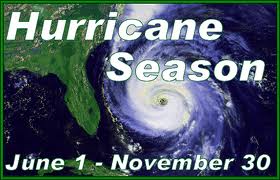
I have lived in Florida almost all of my life and named storms and hurricanes are no strangers to me.  We Floridians learned in 2004 to take the storms that threaten our state more cautiously and seriously. We've been "off the hook" for ten years and it is easy to forget how to prepare and what to watch for.  Here are a few helps that may be needful in this hurricane season:
As we receive news reports, there is a vocabulary you should be familiar with:


Tropical Cyclone: A warm-core non-frontal synoptic-scale cyclone, originating over tropical or subtropical waters, with organized deep convection and a closed surface wind circulation about a well-defined center. Once formed, a tropical cyclone is maintained by the extraction of heat energy from the ocean at high temperature and heat export at the low temperatures of the upper troposphere.
Tropical Depression: A tropical cyclone in which the maximum sustained surface wind speed (using the U.S. 1-minute average) is 38 mph (33 knot) or less.
Tropical Storm: A tropical cyclone in which the maximum sustained surface wind speed (using the U.S. 1-minute average) ranges from 39 mph (34 knots) to 73 mph (63 knots).
Hurricane Watch: Hurricane conditions are
possible in the specified area of the watch, usually within 48 hours. During a hurricane watch, prepare to take immediate action to protect your family and property in case a hurricane warning is issued.

Hurricane Warning: Hurricane conditions are expected in the specified area of the warning within 36 hours. Complete all storm preparations and immediately follow local emergency management officials’ advice about evacuating dangerous or low-lying locations.

Hurricane: An intense tropical weather system
with maximum sustained winds of 74mph or greater.

Hurricane Eye: The center of the hurricane. wind and rain may stop for periods ranging from a few minutes to more than an hour.

Storm Surge: A wave of sea water up to 20 feet
high that arrives with a hurricane, and can affect
more than 100 miles of coastline.

Tornado: The extreme weather conditions
that create hurricanes can sometimes spawn
tornadoes. They occur usually in severe
thunderstorms when wind changes direction and
height, causing rotation.

Our family has a typed checklist saved to a file on our computer for hurricane preparation.  When a storm approaches, we print it and begin prep mode.  That way we don't forget something when we feel rushed to get the house prepared or making arrangements to evacuate.

Our list begins around the end of July/beginning of August with cleaning patio furniture to bring into the house if need be, tree trimming, cleaning rain gutters and keeping grassy mounds of dirt away from the foundation of the house.  If you wait until the week of a storm, it is possible the yard trash will not be picked up before the storm and your yard debris will be all over the neighborhood.

Even in the smallest of storms, it is best to be prepared.  The shelves of local grocers and home improvement stores empty fast when there is a threat.  In our home we have a hurricane disaster kit in a storage container.  In this kit are smaller items that we want to keep together for hurricane season.  This kit contains items such as a battery powered weather radio, batteries, bug repellent, sunscreen, first aid kit, tarps, bungee cords, rope, paper goods and utensils, flashlights, manual can opener, spare keys to cars, house, boat, etc. Anything that we can think of that we would use should we lose power in a storm.

If you plan to stay in your home and weather the storm, you will need food supplies should you lose power.  Non-perishables are pertinent.  I try to buy items that I know I will use later if not for the storm.  If I don't eat SPAM now, neither will I eat it in the dark!
 Avoid opening and closing your refrigerator if you lose your electricity. Keeping your refrigerator closed will help to keep your food cold longer, even without power. You can get away with using up your refrigerated perishables for about two days.  After that, you will need non-perishable items such as bread, peanut butter, crackers, canned foods, fruits, fresh vegetables, juice boxes, sodas, dry or powdered milk, water, both bottled and water for sanitary use.  The rule of thumb is at least 1 gallon per person per day.  If you have small children, babies, senior citizens or pets, you will need to add their individual needs to your checklist.

Add to your checklist to have your prescriptions for at least two weeks.  Fill your vehicles up with gasoline and if you have a generator, fill up additional gasoline containers.  We have a gas grill for which we make sure we have plenty of propane for grilling after the storm should we lose electricity.

Gather all important documents – including your insurance paperwork, bank statements, and identification - and place them in zip lock bags to protect from water damage. If possible, scan and maintain a digital back up of your documents. Keep these documents in a safe place, like a fireproof safe.

Have a "safe place" in your home that is not near windows or doors.  Be prepared to take cover under a table if necessary.  If there appears to be a lull in the storm DO NOT GO OUTSIDE. This could be the eye of the storm passing through. Continue to listen to your weather radio for storm status updates.   Make sure you have a family emergency plan in place. This should include an out of town contact and a meeting place in case you separate. FEMA has a great tool to help create this plan. Visit www.floridadisaster.org.

After the storm, be alert when heading outside. Be aware of glass, nails, and other debris. Always wear shoes.  Poisonous snakes and critters come out in high waters. Keep an eye on your pets.   DO NOT TOUCH any downed power lines or any objects in contact with downed lines. Report downed lines to your local electric company or FPL by calling 1-800-468-8243.

Stay safe and be prepared!
JoAnn Young, Florida Realtor and Mortgage Broker.  321-243-4917


Sunday, July 19, 2015

10 Ways To Make Your Home More Energy Efficient

Here are 10 ways to make your home more energy efficient
from Home Depot.

1. Install a programmable thermostat.

Home Depot estimates that you could save up to $180 in energy costs by utilizing a programmable thermostat. While conventional thermostats are programmed manually, Energy Star thermostats offer a range of options for controlling your home’s temperature. According to your schedule and your temperature preferences you can set a program for your thermostat to follow so you won’t have to think about programming it manually. Automatically lowering your energy costs during the day if you work outside the home adds up to significant savings over the course of year. There are many options available depending on your needs, and the price ranges from around $40 to $100 dollars.

2. Change to CFL bulbs.

Compact Fluorescent Light bulbs are inexpensive and each bulb can save you $30 over its lifetime. CFLs use about 10 times less energy than regular bulbs and last much longer. My Home Depot advertises a 9-year warranty, and since Home Depot has not stocked these bulbs for nine years yet, my Home Depot guide told me I would not need to keep a receipt because they would replace any non-functioning bulb for free. I can’t guarantee that this is the case at every store.
CFLs are now available in soft white, bright white and daylight. The only downside of CFLs besides the slightly higher initial cost is that they take about 20 seconds to reach their full brightness.

3. Choose Energy Star qualified appliances.

Energy Star appliances use between 10-50% less energy and water than their conventional counterparts. These appliances have to meet certain criteria set by the EPA and DOE. You can purchase Energy Star qualified dishwashers, refrigerators, freezers, washers, dryers and a few other appliances. However, buying a new appliance to replace an older appliance that is still functioning is rarely going to be a frugal or environmentally-friendly choice.

4. Update your exterior doors.

For energy efficiency, steel or fiberglass-clad doors are your best bet. Storm doors can also boost your home’s energy efficiency. Screen doors allow air to circulate during the warmer months while still keeping the bugs out. Home Depot has instructions for installation on their website here.

5. Update your windows.

Depending on whether your home currently has single- or double-pane windows, updating your windows with Energy Star qualified windows can save you between $100 and $500 a year in energy costs. However, replacing all the windows in your home is an expensive improvement, and it may take several years to recoup the cost.
A cheaper option that still allows for energy-savings in the summer is heat control window film. There are several varieties of window films available including glare-control, frosted or mirror for added privacy and decorative or tinted. You can watch a video about window film here.

6. Install dimmer switches and motion detectors.

Dimming your lights saves you money on energy costs. Dimming the lights 25% saves you an average of 20% on lighting costs. Adding a dimmer switch to your lights also allows you to control the ambiance of the room with the flick of a switch (or the slide of the lever, twist of the knob etc.)
Motion detector lights turn on when they detect any movement making them ideal for security and energy savings.

7. Install a ceiling fan.

In the summer, run the fan so the blades circulate counter-clockwise and circulate the air downwards. Although the movement of the air won’t affect the temperature, the wind chill effect makes your body perceive a cooler temperature allowing you to turn the air conditioning up or off and remain comfortable.
Ceiling fans are useful in the winter, too. When it’s cold outside, run the fan so the blades rotate clockwise and circulate the air upwards. There should be a switch on the side or top of the fan to reverse the direction of the blades.
Installing a ceiling fan may be easier than you think. Home Depot has instructional videos and tutorials with step-by-step instructions on their website here. Your best bet is to choose and Energy Star ceiling fan with a CFL light kit.

8. Regularly maintain your furnace and water heater.

I learned that water-heating is the third greatest energy expense in the home. Proper maintenance keeps energy costs down and increases the life of the furnace and/or water heater.

9. Seal your home from heat and cold.

Almost half a home’s energy expenses go toward heating and cooling so making sure the air doesn’t escape through cracks is essential. There are several inexpensive products and tools to seal cracks including caulk and weather-stripping. Check for daylight or drafts to find any potential leaks. Places to examine are around all windows and doors, folding attic stairs, the dryer vent and the fireplace.

10. Insulate your home.

Inadequate insulation and air leakage are the leading causes of energy waste in a home. Insulation is measure by an R-value, and the higher the R-value, the better the insulation will perform and the lower your energy costs will be. Many homes are constructed without enough insulation because builders often add only the minimum required. Home Depot offers a free evaluation and estimate of your home’s current insulation status. Insulating your home properly can save you up to 20% of your heating and cooling costs.

Great money-savings tips from Home Depot!  - JoAnn Young - People's First Financial Services, Inc.  321-243-4917

Saturday, May 30, 2015

Pool Cleaning 101

Many Florida homeowners have the luxury of owning swimming pools.  Hot weather =
cooling off and time for refreshing dips in the backyard pool.  Some homeowners choose to hire a pool cleaning company to maintain the swimming pool.  My home also has a swimming pool.  I have chosen to care of the pool maintenance on my own.   I have learned over the years how to keep the water looking crystal clear and would like to share with my community of readers.
Clean and balanced water chemistry are the keys to pool maintenance.  Make you sure you have a water testing kit.  Many pool stores sell test kits where you can test the water.  Too low of a PH can cause several types of algae to begin growing.  Treating the out-of-balance water is more costly than maintaining the water.  Too high of a PH can cause the internal parts of your pool pump, cleaning equipment and other parts to break down over time.
BALANCE
Establish a weekly routine to clean the pool and maintain the chemical balance. Set reminders on your smart phone to remind you to add tablets to the chlorinator or test the water weekly.  Test the pH and free available chlorine in the pool water and shock-treat, if necessary, on a weekly basis. if any of the following occurs, you may need to do an additional shock treatment:
·         Very heavy rains and windstorms,
·         More swimmers than usual
·         Foul odor from the pool water
·         Extreme temperatures
·         Algae growth


CHLORINATE

Bacteria and algae can grow at a rapid rate.. Your continuous chlorine level should always fall between 1 and 4 ppm for proper sanitation and to prevent bacteria and algae.
·         Liquid Chlorine – Liquid chlorine is two to three times stronger than household bleach. Liquid chlorine is easy to apply and an effective sanitizer, but it has a short shelf life compared to other chlorine products and you must be careful when pouring into your pool water not to splash onto your clothing.


·         Chlorinating Tabs - Many varieties of chlorine sanitizers offer a multifunctional approach to pool care. Two 3” tablets in the chlorinator on a per week average is what I use and I turn the chlorinator to “full” in the summer months.  There are a variety of chlorinating tabs available to sanitize your pool, kill bacteria and control algae, while softening your water and protect pool equipment.


SHOCK YOUR POOL

Shocking weekly can get rid of contaminants that cause cloudy water, chlorine odor and eye irritation, while also preventing future problems and reducing the need for other chemicals. Basic shock products help kill bacteria and break down cosmetics, suntan lotions, perspiration and other swimmer wastes that can't be filtered out of pool water.  It reduces chlorine odor, eye irritation and it helps to keep your pool sparkling clear.

ALGAECIDE

Add Algaecide to Your Pool - Millions of tiny microscopic plants in the form of algae can march into your pool by rain, wind and fill water. Leave it unchecked and your water will quickly become unusable due to clogged filters, low water circulation and reduced effectiveness of pool chemicals. Algaecides prevent algae from taking prevention is the key to an algae-free pool. Some algaecides quickly kill all types of algae and prevent them from returning. Other algaecides focus specifically on preventing and removing green algae, which is the most common kind found in a pool. In the case of an algae outbreak, algaecides can quickly and efficiently eliminate the problem and restore your pool to sparkling clear.  The type that seems to sneak into my swimming pool is the yellow mustard algae which appears when the warmer temperatures kick in the water is warmer.

CLEAN THE POOL

Skim debris out of the pool.
Clean all skimmer baskets during swimming season.
Clean the walls and floor. Use cleaners, brushes and vacuums recommended by the pool manufacturer. Start at the shallow end and continue to the deep end. Overlap each stroke when vacuuming and brushing to cover all areas thoroughly. Always keep the vacuum head under water while in use. Otherwise air will get into the hose and cause a bubble in your vacuum.
Hose down the pool area. Direct the spray away from the pool to prevent dirt from washing into the water.
I take a water sample to my local pool store for testing if I am having difficulty balancing the water.  Your local pool store will provide free testing and advice.  Many times it is a simple fix such as adding calcium to the water or adjusting the PH level.  If your pool has been “let go”, they can help you straighten out the water balance.  Usually they provide a computer print-out of what the water needs with a written step by step process on how and when to add chemicals.  Make sure you follow the directions carefully so as not to have to repeat steps and add more expense to the cure.

The longer you own your pool and work with it, you will learn what keeps it sparkling.  I can detect a slight tinge in the color or the water or it “feels” different and I know what it needs.  Maintaining your swimming pool is really not that difficult.  Staying on top of it and being consistent is the key.    Just remember, if you let it go for even a week or two, the results of no maintenance cost more in the long run to reverse than just regular maintenance.
Have a fun and safe swimming season!
by JoAnn Young - Florida Realtor, Young & Young Properties